
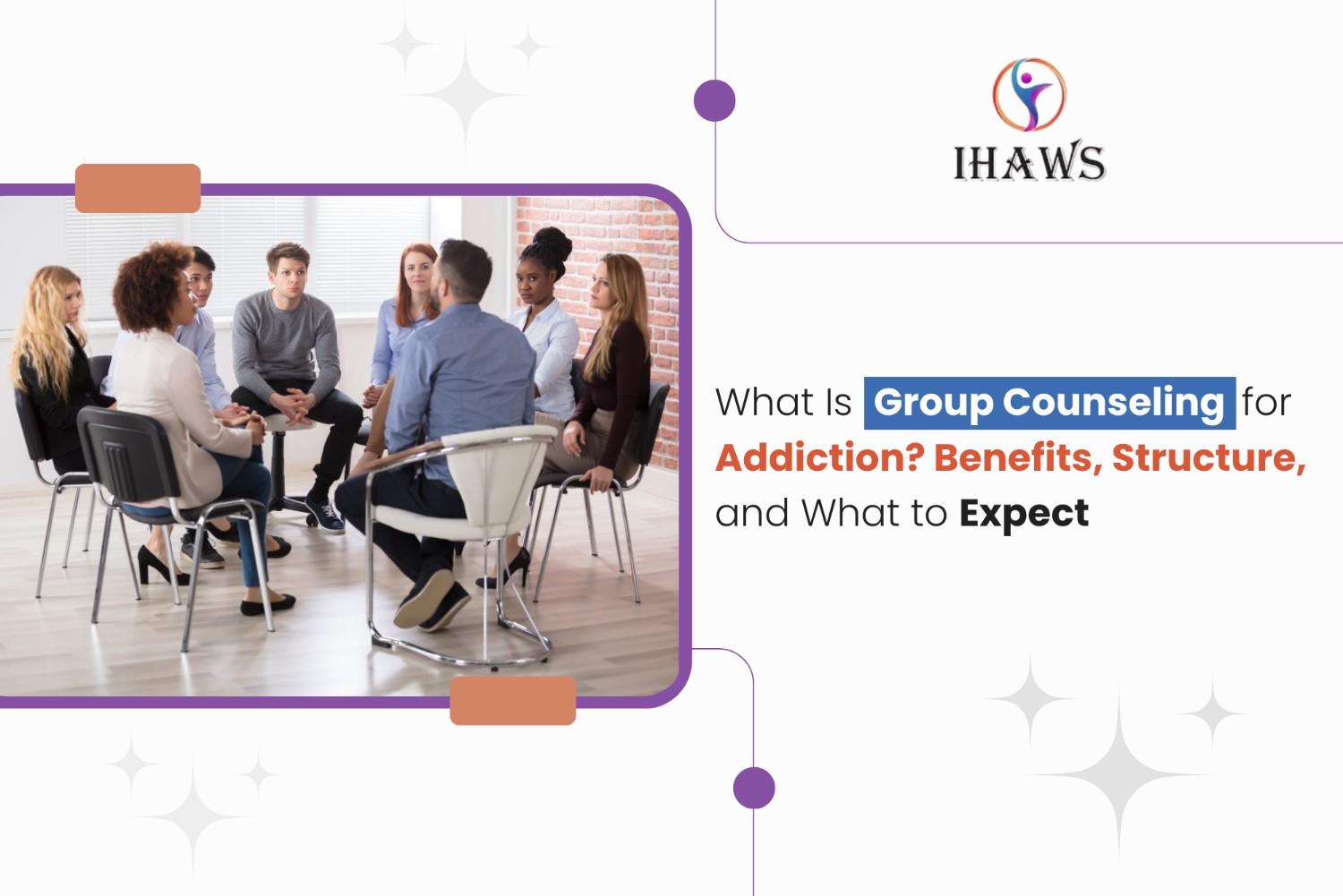
When most individuals enter their initial group session, they do not have the slightest idea of what to expect and leave wondering why they waited so long.
Group counseling is a service that is highly prescribed in the treatment of addictions, and the majority of people are not actually aware of what they are getting themselves into.
They envision a folding-chair circle, people crying, perhaps a person with a clipboard inquiring how that felt to them. That’s not really it.
What happens during a group counseling session is more like this – a few individuals who are all struggling with their relationship with substances, guided by a trained counselor and going through material that directly relates to where they are in the recovery process.
Sometimes that’s skill-building. Other times, it discusses what has occurred in the last week. At other times, it is uncomfortable, yet convenient at the same time.
This post discusses what group counseling around addiction is, why it usually works, what gets discussed, and what your initial few sessions will be like.
Group Counseling vs. a Support Group: Not the Same Thing
This distinction matters because people mix them up constantly. A support group like AA or NA is peer-led. There’s no clinician running the room. Members share their experiences and support each other, and that’s genuinely valuable. But it’s not the same as group therapy.
Group counseling, or group therapy for addiction treatment, is run by a licensed counselor or therapist. There’s a treatment plan behind it. Sessions follow a structure. The facilitator is trained specifically to manage group dynamics – they spot what’s happening beneath the surface of a conversation, and keep the group clinically productive rather than just socially comfortable.
Both have a role in recovery. They’re just different tools.
Why Group Therapy Works
The question people ask most is why group at all. Why not just do individual therapy, where you have the counselor’s full attention and you don’t have to talk in front of anyone?
Individual therapy has its place. Most solid programs include both. But group therapy for addiction recovery does something that one-on-one sessions can’t: it puts you in a room with people who are actually in it with you. Not a clinician who understands addiction professionally. People who know what 3am cravings feel like, what it costs to tell your family, what it’s like to start over.
That changes things in ways that are hard to manufacture otherwise.
Specific reasons group therapy tends to work
- Shame gets smaller when you hear your own experience come out of someone else’s mouth. A lot of people in addiction treatment carry the belief that what they’ve done or who they are is uniquely bad. Group tends to disrupt that.
- Accountability in a group has more pull than accountability to a therapist. When other people in recovery are watching whether you follow through, the stakes feel different.
- You get to watch people who are further along in recovery. Hearing what actually worked for someone two years out is more useful than a lot of what gets covered in a textbook.
- Talking honestly in front of people is a skill. So is listening without waiting for your turn. Group therapy is one of the few places you actually practice both at once.
- Over time, the group becomes part of your life outside the session. Isolation is one of the most consistent risk factors for relapse. Group counseling pushes against that.
You can get a lot from one-on-one therapy. But hearing someone else say the exact thing you’ve never told anyone – that’s something else entirely.
What a Session Looks Like
Sessions usually run 60 to 90 minutes.
Group size varies – six to twelve people is typical for outpatient settings. The frequency depends on the program, anywhere from once a week to several times a week.
How most sessions are built
Almost every session starts with a check-in. Each person says something brief: how the week went, what they’re bringing into the room, what they want to focus on. It’s not small talk. It gives the facilitator a read on the room and signals to everyone that the session has started and presence is expected.
From there, where the session goes depends on the type of group. The most common formats are:
- Psychoeducational. The counselor teaches something specific: how the addiction cycle works, what triggers are and how to map yours, what the brain is doing during cravings. Discussion follows. These tend to dominate early in treatment when people are still building basic understanding of what’s happening to them.
- Skills-based. The focus is on a concrete coping skill: how to interrupt a craving, how to handle a high-risk social situation, how to communicate with someone you’ve hurt. The group practices it, not just hears about it.
- Process-oriented. These are less structured. Members bring what’s actually happening in their lives and the group works through it together. More raw than the other formats. Usually better suited for people who’ve been in treatment long enough to handle that level of honesty in a group setting.
- Relapse prevention. Specifically focused on identifying warning signs before they become a crisis and building a real plan for what to do when the risk is high.
Most sessions end with a brief close – a summary, a commitment from each person about something they’re taking into the week, or simply a deliberate ending so the session doesn’t just trail off.
What Gets Talked About
The specific substance abuse group topics covered in any given session depend on the program, the type of group, and where members are in their recovery. But across programs, certain subjects come up again and again because they’re central to what addiction actually does to a person’s life:
- Triggers: identifying them, understanding why they have pull, and figuring out what to do when they show up
- Cravings: what’s actually happening and how to get through them without acting on them
- The thinking patterns that keep people stuck: rationalization, minimizing, the internal logic that made using feel reasonable
- Relationships that got damaged and what to do about them, including the ones that aren’t worth repairing
- Grief, because recovery involves loss, not just of substances but of identities, habits, and sometimes whole social worlds
- Managing emotions that substances were doing the managing of. For a lot of people, this is the core of it.
- Shame. It runs through nearly everything else in addiction and it rarely gets better in silence.
- What daily life looks like now, including work, money, housing, routines, and relationships that need rebuilding from scratch
- Relapse: what happens before it happens, what to do if it does, and how to get back on track without making it mean everything
None of these are easy conversations. A well-run group doesn’t make them easy. It makes them possible.
What Good Group Sessions Actually Include
There’s a stereotype that group therapy is just talking. A circle of people taking turns. Sometimes it is, and that’s fine. But good group therapy ideas for substance abuse work with the reality that people process things differently and that sitting still and talking isn’t how everyone opens up.
Skilled facilitators use a range of approaches depending on the group and what the session calls for:
- Written exercises that help people articulate things that are hard to say out loud first. A prompt, some time to write, then the conversation.
- Role-playing difficult conversations: telling a family member about a relapse, saying no to someone you’ve always said yes to, asking for something you need. Uncomfortable to practice. Useful when the real situation comes.
- Hypothetical scenarios that let the group work through a problem without anyone having to own it personally right away. Often a back door into more personal conversations.
- Goal-setting with follow-through built in. Not aspirational goals but specific, observable ones with a check-in next session.
- Structured discussion where the facilitator poses a specific question rather than opening the floor and hoping something useful surfaces.
What format the session takes matters less than whether the facilitator can keep the group honest. The best ones know when to let something breathe and when to redirect it.
Your First Few Sessions
Most people are nervous before the first one. That’s not unusual.
You won’t be pushed to share immediately. Most facilitators give new members time to observe. You can say very little for the first session or two. What matters more than what you say early on is whether you keep showing up.
Trust in a group builds through repetition. The same people, the same room, week after week. You start to understand who each person is. You start to see patterns. You notice when someone is struggling even if they say they’re fine. The group starts to feel real in a way that takes a few sessions to develop.
On confidentiality
What gets shared in group stays in group. This is typically a formal expectation, not just an informal norm. Members agree to it before joining. The facilitator will go over the specifics in the first session, including what it covers and where the limits are.
What helps you get something out of it
- Show up consistently. Other members notice when you’re absent. The group dynamic changes. Your own thread in the group gets lost.
- Actually listen when other people are talking, not just wait for your turn.
- Bring what’s actually happening in your life, not the version of it that’s easier to talk about.
- If something said in group lands hard, bring that to your individual counselor if you have one. Groups surface things worth pursuing.
If it feels uncomfortable after the first couple of sessions, that’s not a sign to stop. It’s often a sign you’re getting close to something real.
ON TIMING – Group therapy is not a quick fix – the people who get the most from it are the ones who stay. If you’re not sure it’s working after a few weeks then bring that up with the facilitator. That’s a better move than just dropping out.
Does Group Replace Individual Therapy?
Not exactly. They do different things.
Individual therapy gives you private space for the stuff that’s too raw or too specific to bring to a group:
- Trauma history
- Family dynamics
- Things you’ve never said to anyone
That kind of work needs a room where it’s just you and the counselor.
Group, in the context of group therapy for addiction recovery, gives you something individual sessions don’t: practice. Real-time feedback from people in similar situations. The experience of being seen and still being accepted.
Not having to explain from scratch what addiction feels like because everyone in the room already knows.
Programs that use both tend to produce better outcomes. That’s well-documented. But group counseling alone is not a lesser option.
For a lot of people, it’s where the most lasting change actually happens, because it mirrors the social world they’ll have to navigate in recovery.
Group Counseling at IHAWS
Integrated Health & Wellness Services in Wilmington, DE, offers counseling that includes group and family formats – alongside individual sessions and psychiatric medication management.
We work with people dealing with substance use disorders including opioids, alcohol, and others.
Want to Know If Group Counseling Is a Fit for You?
We offer group and individual counseling for addiction, substance abuse treatment, and psychiatric medication management.
In-person in Wilmington and telehealth across Delaware. No long intake process before we answer your questions. Call us, or book through the contact page.
Book: ihaws.org/contact