
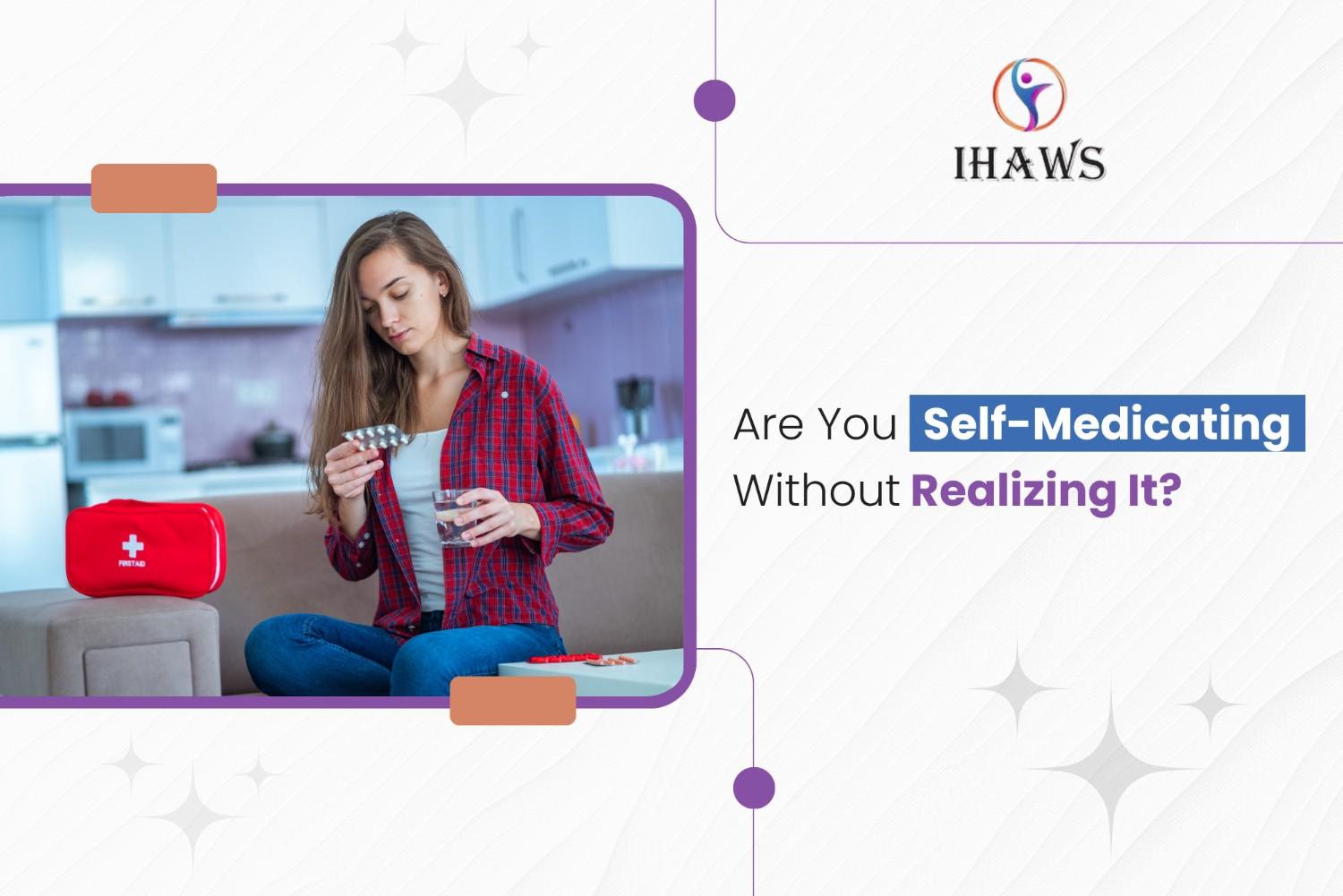
Most people who are self-medicating have no idea that is what they are doing. They just know that a certain thing helps them get through. And for a while, it does.
Think about the last time you felt really anxious or low. What did you reach for? A drink to settle your nerves? A few extra hours of sleep?
Food that had nothing to do with hunger? A substance that took the sharpness off the day?
None of those things feel like a red flag in the moment. They feel like coping. And in a narrow sense, they are.
The problem is that coping and healing are very different things. One manages the feeling. The other addresses the cause.
Self-medication is what happens when the managing part takes over completely, and the actual cause never gets touched.
Why People Do It Without Knowing They Are
Nobody decides to self-medicate. There is no moment where someone sits down and thinks, “I have untreated anxiety, and I am going to start using alcohol to manage it.” It does not work that way.
What actually happens is much slower. You discover, almost by accident, that something takes the edge off. The drink that relaxed you at a work event. The cannabis that finally lets you sleep. The painkillers left over from a surgery that also happened to quiet whatever was happening emotionally that week.
The brain is very good at remembering what brought relief. It is designed to be. So it starts making that association tighter and tighter. Over time, the gap between “stressed” and “reaching for that thing” gets shorter. Eventually there is almost no gap at all.
By the time most people recognize the pattern, it has been in place for months. Sometimes years.
What it tends to look like
- Using more of a medication than was prescribed because the amount prescribed ceased to be effective
- Wasting hours scrolling, eating, gaming or watching something because you do not want to sit and reflect on yourself
- Depending on painkillers, even after the actual cause of it is eliminated
None of them appears to be on the surface to be an addiction. They resemble habits, tastes, and fads. Such invisibility is a large portion of what makes self-medication so long undetected.
Something Else Is Almost Always Underneath
The most common things beneath it:
- Fear that functions as a background noise on even those days when nothing bad is going on.
- Depression, which is not necessarily sadness, sometimes it is simply a matter of feeling flat, tired, or empty with no apparent reason.
- Trauma that had been buried due to a lack of space, time or support to process.
- Untreated ADHD, where an individual has to deal with concentration issues and hyperactivity.
- Grief that had nowhere to land and so never fully moved through
- The chronic pain, which got entangled with emotional pain on its way.
The self-medication fails to cease when these are not addressed. Although one may be able to give up one thing, the urge to another usually manifests itself instead. Since the weight being carried has not been eliminated.
Signals worth paying attention to
- You feel noticeably worse, anxious, irritable, or low when you go without something for a day or two
- The amount that used to work does not work the same way anymore
- You have tried to cut back and were genuinely surprised by how hard it was
- You find yourself not being fully honest with people about how much or how often you use something
- You reach for it specifically when you feel bad, never because things are going well
- People close to you have said something, and even if you dismissed it, it stayed with you
How a Coping Pattern Becomes Harder to Undo
There is a trajectory to this that most people do not see coming. It moves in stages, and each stage feels normal because it builds on the one before it.
Tolerance comes first. The brain adapts to whatever you are putting into it, so over time, it takes more of the same thing to get the same effect. The increase happens so gradually that it rarely feels like a decision.
Then comes dependence. When you stop or cut back, the original feeling returns, and it usually comes back harder than before. Now the substance or behavior is not just providing relief. It is preventing withdrawal. Those are very different things, and the difference matters.
At a certain point, the mental health issue and the substance use are no longer separate. Each one is making the other worse. This is what clinicians call a co-occurring disorder, and it is more common than most people realize. It also means that treating only one side of it rarely holds.
On the subject of willpower
A dependency is formed and the brain has truly been restructured around it. In certain substances, quitting without medical assistance can be perilous.
And even when the physical piece is manageable, the emotional exposure of feeling everything without the buffer can be genuinely overwhelming for someone who has been numbing that out for years.
It has nothing to do with not being disciplined. It is about needing the right kind of help.
Getting the Right Help
That process at IHAWS is developed around a few things:
- An actual psychiatric assessment
- Individual counseling that goes into the emotional history, the patterns, the moments that shaped the way you cope now
- Medication management when it is the right fit, treating anxiety, depression, or other conditions with something that is actually calibrated to your brain
- Family and group counseling, because isolation is one of the things that keeps these patterns running, and connection is one of the things that interrupts them
- Substance use treatment, including medically assisted approaches when the physical dependency piece needs to be addressed safely
- Ongoing monitoring, because recovery is not linear and the plan needs to be able to adjust as your life does
What this is not is a judgment. People who self-medicate are not weak or careless. They are people who found something that worked well enough to get through, before they had access to something better.
Don’t Wait for Things to Get Bad
A lot of people hold off on reaching out because they are not sure their situation is serious enough. They compare themselves to a worse version of the problem and decide they are fine by comparison.
But getting support early is not about how bad things are. It is about how much easier things become when you address something before it digs in deeper.
It might be time to talk to someone if:
- Something in this post felt more personal than you expected it to
- You rely on something to get through most days and you are not sure what you would do without it
- You have tried to slow down or stop on your own and found it harder than it should have been
- You are managing a mental health condition without any professional support and it is getting heavier over time
- You are just worn out from handling everything by yourself and want a different way forward
None of these requires a crisis. They just require honesty about where things actually are.
You Have Been Getting Through. Now Let’s Actually Get Better.
At Integrated Health and Wellness Services, we work with people who are tired of just managing things and ready to understand what is actually going on. We see both the substance use and what has been driving it, and we treat both. No lectures. No judgment. Just real, steady support.
In-person in Wilmington and telehealth appointments available.
Book a Confidential Appointment → ihaws.org/contact