
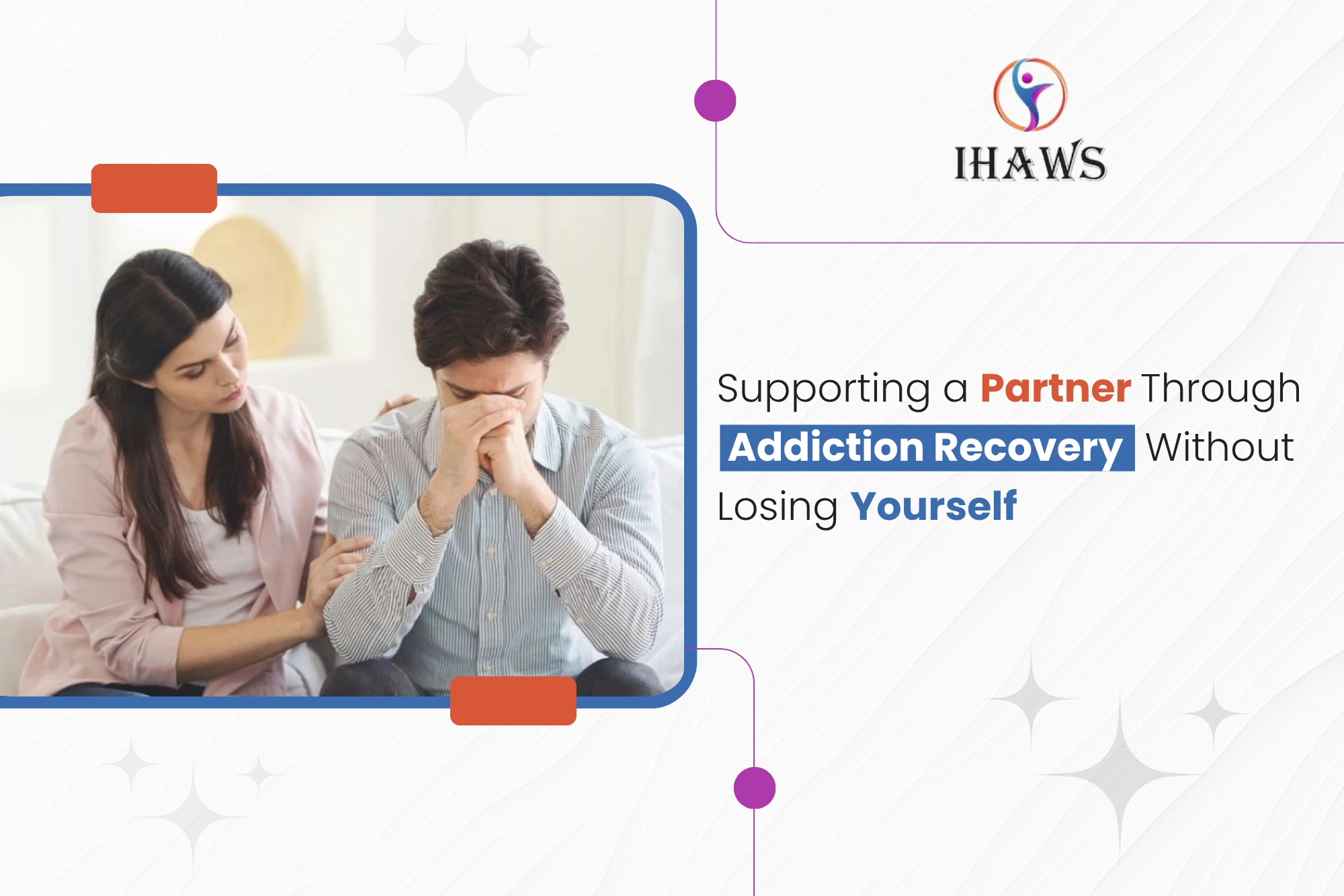
Around month four, many partners find they haven’t seen a friend in weeks.
They have been following someone else’s mood, someone else’s meetings, someone else’s good days and bad days, and somewhere in there, their own life has quietly gone on hold. It’s something that is never planned for.
Slowly, it just creeps in, one rearranged weekend at a time.
One of the most important roles you can play as a partner is to support your loved one through their recovery.
It’s also one of the ways to fall completely away from yourself, most often without realizing it until you are already in too deep.
Caring About Someone Isn’t the Same as Managing Their Recovery
There is a fine line between supporting an individual and supervising them, which tends to be crossed with little more than a sense of inconvenience. Checking in becomes checking up. Encouragement becomes monitoring.
The partner is not responsible for someone else’s sobriety – it is a real and valuable role. That difference makes more of a difference than it sounds like, since shouldering the burden of someone else’s decisions is tiring in an unsustainable manner for all involved parties.
Watching for the Signs You’re Disappearing Into This
It rarely happens all at once. A few signs tend to show up gradually:
- Your own friendships have quietly faded because there’s no time or energy left for them
- You’ve stopped doing things you used to enjoy, not because you decided to, just because they fell off the schedule
- Your mood depends heavily on how your partner’s day went
- You feel guilty taking time for yourself, like it’s selfish given everything going on
- You’ve started speaking for your partner in social situations, filling in details, managing how others perceive them
None of this makes someone a bad partner. It usually means someone who cares a great deal and hasn’t drawn a line yet between supporting and absorbing.
What Actually Helps the Person in Recovery
Here’s the part that surprises people. A partner who maintains their own life, their friendships, their work, their own therapy if they’re in it, tends to be more helpful to someone in recovery than a partner who’s given everything up to focus entirely on them.
This is what recovery programs constantly talk about. With codependency, the one whose greatest asset is their ability to control someone else’s behavior has actually disabled sobriety. It puts pressure on, breeds resentment, and creates a relationship structure that neither party can maintain for long.
A partner who still has their own identity gives the relationship something steady to stand on, rather than two people both circling the same crisis.
Boundaries Aren’t Punishment, Even Though They Can Feel Like It
Saying no to covering for a relapse, or to forgive again, or just disengaging from a conversation that’s escalated into an argument. It’s definitely one of the most loving things a partner can do, even when it does not feel that way at the time.
Boundaries provide a starting point for both individuals. If you don’t have these, support becomes rescuing, and rescuing anyone from the natural consequences of their choices has limited capacity to help the person forward in recovery. It only postpones the point when they actually need to confront what is happening.
Family and Couples Counseling Exists for This Exact Reason
Many partners have attempted to figure out all of this by themselves because nobody told them that there was another way. What family and group counseling, the type that is built around an addiction recovery process specifically, offers both people is a language for talking about these issues and a structure that can make it much easier to develop this conversation when we’re dealing with the crisis of addiction alone.
This isn’t about assigning blame. It is a process of both people learning what helps versus what merely feels helpful while quietly making the whole situation more difficult. Most often, a counselor who works with addiction has witnessed the same specific scenario play itself out dozens of times over and can identify dynamics a partner is too close to the situation to see clearly themselves.
Your Own Support System Isn’t Optional
Therapy, a support group for partners and families of people in recovery, even just a friend who isn’t tangled up in the situation, all of it matters. Partners need somewhere to process what they’re feeling that isn’t centered entirely on the person in recovery, because constantly redirecting your own emotions toward someone else’s struggle eventually runs you dry.
Taking care of yourself in the middle of this isn’t a distraction from supporting your partner. It’s what makes continuing to support them sustainable past the first few hard months.
Supporting someone through recovery doesn’t mean disappearing into it. You deserve support too.
IHAWS provides addiction treatment, counseling, and family and group sessions for individuals and families navigating recovery together in Wilmington, DE and the surrounding area. Whether you’re the one in recovery or the partner standing beside them, our team can help both of you find steadier ground.
Visit ihaws.org or call to schedule an appointment.