
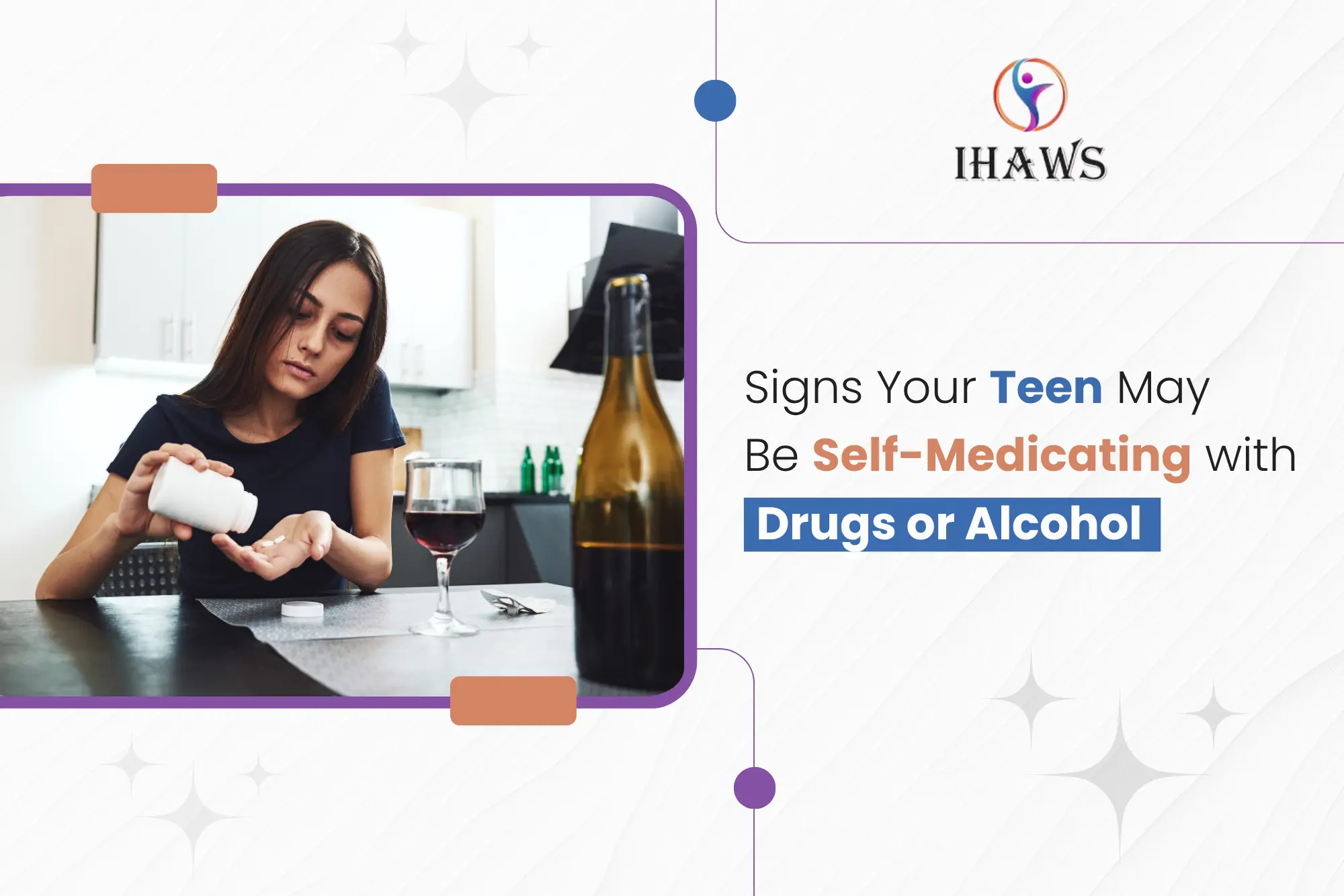
Most parents describe this moment in almost the same tone of voice. Something just changed, they say. Not all at once. Just something happened.
The in-between place – that is one of the most lonely places for a parent to sit.
When we think of self-medication, it rarely looks as it actually does. Its almost never the obviously-drunk teen who comes home staggering after curfew.
It is almost never the obviously intoxicated teenager stumbling in after curfew. More often it is quieter than that: a kid using substances to turn down the volume on something they don’t know how to carry any other way. Anxiety that won’t let them sleep peacefully.
What You’re Actually Looking For
Self-medicating in teenagers does not usually announce itself. It seeps in. The changes are real but they are easy to rationalize, especially when you are watching your kid navigate everything else adolescence is already asking of them.
You are not looking for a dramatic sign. You are looking for a version of your kid that feels slightly off from the one you know.
Some things that tend to be telling:
- The kid who used to be wound up and anxious has gone strangely calm. Not peaceful. Flat.
- Conversations that used to have some life in them now feel like pulling teeth.
- A friend group that changed, and you were never introduced to the new one.
- Sleep that makes no sense, either far too much of it or barely any.
- Something they genuinely loved six months ago that they never mention anymore.
- A smell you noticed once, and then talked yourself out of.
None of these things alone means anything definitive. Together, in a kid you have been watching for fifteen or sixteen years, they mean something.
Related – Teen Mental Health and Substance Abuse: Early Warning Signs and How to Help
The Shift That’s Hard to Name
There is a difference between a teenager having moods and a teenager who has quietly become someone slightly different.
Moods pass. This doesn’t. The kid who used to fight you on everything and now just shrugs. The one who cared desperately about how they came across to other people and has stopped caring entirely. What you’re sensing is not drama. It’s dimming.
Physically, you might notice:
- Eyes that are glassy or just not fully there.
- Appetite that has swung to an extreme in either direction.
- Hygiene that has slipped past the usual teenage standard.
- A particular kind of tired that looks different from just not getting enough sleep.
Socially and behaviorally:
- Pulling away in a way that has a different quality than normal teenage privacy.
- Defensiveness when you haven’t asked anything accusatory.
- Money or things missing from the house. Explanations that don’t quite add up.
- Stories about where they’ve been that feel practiced rather than real.
Why It’s So Hard to See Clearly
You love them. That is genuinely part of why this is difficult. You want the explanation to be something manageable, so you find one. Stress at school. A rough patch. The fallout from that friend group situation last spring.
Sometimes that is exactly what it is.
The way you tell the difference is less about any single sign and more about how many of them are present, and for how long. A hard week looks like a hard week. Three months of this looks like something else.
The Conversation
Most parents wait too long to have it because they’re afraid of two things: being wrong, and making it worse by bringing it up.
Teenagers who are using to cope are almost never keeping it secret because they want to hide it from you. They are keeping it secret because they don’t have words for what they are managing, and they are genuinely not sure you could handle knowing.
The conversation does not have to be perfect. It does not have to produce a confession. It just has to say:I see that something is happening and I am not going anywhere.
That is often enough to open a door that has been shut for a long time.
IHAWS Is Here When You’re Ready
We are Integrated Health & Wellness Services in Wilmington, Delaware, and we treat teenagers and adults struggling with substance use as well as the mental health conditions that often co-occur with it. We provide individual counseling, family therapy, psychiatric evaluation, and medication management. Both in-person and telehealth – whatever fits your life.
Get in touch.
Phone- (302) 427-8000