
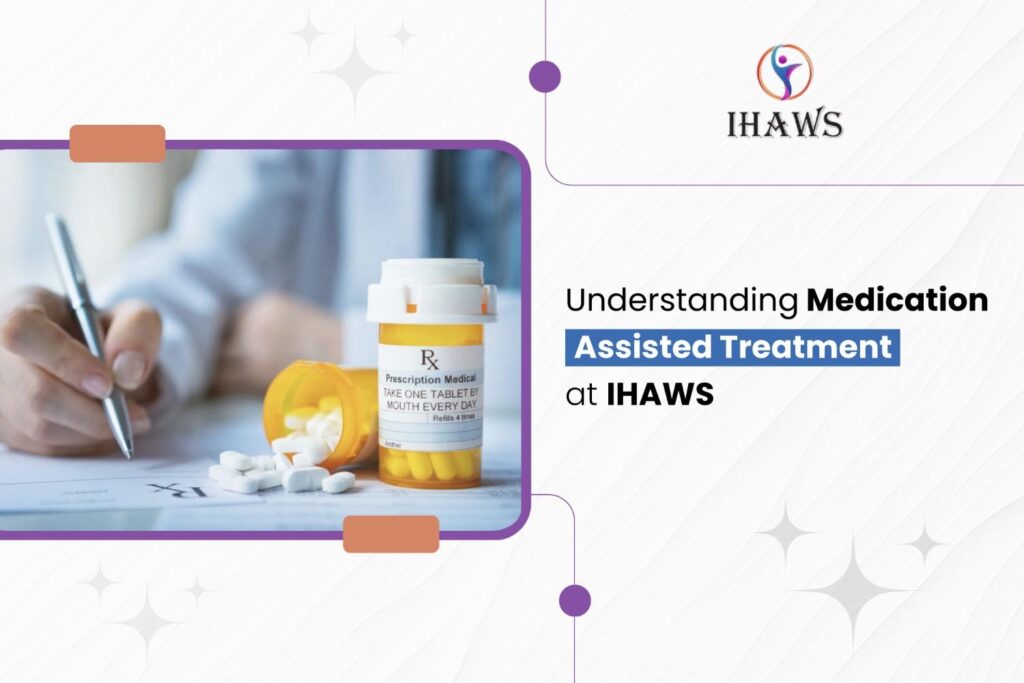
If your loved one is struggling with a substance use disorder, you may come across a term called “Medication Assisted Treatment”, or MAT.
While the term sure sounds clinical, the approach is one of the most empathetic and best scientific practices of treating substance use disorder patients.
Integrated Health & Wellness Services, LLC (IHAWS), located in Wilmington, DE is among the leading providers of MAT and uses MAT as a foundational service in helping patients regain control of their lives.
What is Medication-Assisted Treatment?
MAT is the use of FDA-approved medications in conjunction with behavioral therapy and psychosocial support in the treatment of substance use disorder.
MAT is not a shorter way of achieving recovery; actually, it is the opposite.
MAT assists patients with their recovery by helping them deal with the emotional/psychological parts, and most importantly, the neurobiological part of the addiction.
The goal of MAT is not just to cease use of the substance.
The aim is to stabilize the brain’s chemistry, to decrease cravings, reduce the probability of relapse, and provide a solid foundation for the patient to start from.
How MAT Works in the Brain
Addiction should be viewed as a disorder of the brain that happens chronically and not as a moral failure.
Because the brain is hijacked by the use of opioids, the brain’s reward system becomes flooded with neurotransmitters like dopamine, and alters the brain’s prefrontal cortex’s ability to control impulses and make decisions.
Your brain eventually stops producing the normal levels of neurotransmitters that occur naturally.
MAT medications work by:
- Alleviating withdrawal symptoms that make the initial stages of recovery physically excruciating
- Relapse prevention by blocking opioid receptors, therefore blocking the potential for euphoria as a result of an opioid use disorder (OUD) episode
- Contributing to the normalization of chemical activities, reducing the peak of obsession with using opioids
- Boosting positive emotional states so that psychotherapeutic interventions are more efficacious
Which Medications Does IHAWS Use?
IHAWS clinical staff engage in specific prescription management as part of broader treatment modalities.
Your treatment plan might also include:
- Psychiatric medication management for associated mental health issues such as anxiety, depression, or PTSD – all of which commonly co-occur with substance use disorder (a pattern clinicians refer to as dual diagnosis or comorbidity)
- Ongoing risk management to establish that your medication(s) are safe and effective
- Pharmacogenomic testing (DNA Drug Testing), which helps to determine how your body’s unique genetic makeup metabolizes and excretes various medications, enabling the healthcare provider to use more accurate prescribing guidelines
Related – What Are the Signs That Someone Needs Substance Abuse Treatment?
MAT is an Integral Part of Your Recovery
This is a critical point: medication is merely one component of a multifaceted treatment plan.
At IHAWS, your care plan will most likely include:
- One-on-one therapy designed to help with target identification, coping skills development, and co-occurring trauma or mood disorder diagnoses
- Relational support systems are rebuilt with family therapy and group therapy
- A blend of telehealth and in-person visits to create access to care effectiveness in your real life
This helps us treat every client without judgment. We know that recovery is not a straight path, and that is why we are here to revise your plan based on your needs.
Next Steps
We understand that this process can be daunting.
Since 2018, IHAWS has been helping members of families in Wilmington, DE.
To start, you can reach us by calling 302-427-8000; visiting us at 1508 Pennsylvania Ave, Wilmington, DE 19806; or you can book your appointment at ihaws.org.
We look forward to helping you with your recovery journey, because it is worth it.
FAQs
Is MAT a solution for every person with an opioid use disorder?
No. MAT is one of a number of possible treatment options.
Will I be on medication for the rest of my life?
Not necessarily. MAT is a temporary solution.
Your care team will help you with that decision.